Problem
HPI was formed around an insight about the recovery habits of elite tennis players in the 70’s. Its Corporate Athlete training was popular and effective, however its growth had flatlined and the experience was shop worn.
Organization / Transformation / B2B Corporate Wellness
Connecting a corporate wellbeing program’s promise to the participant experience—from registration and coaching to the spaces, services, and tools that support sustained wellbeing and performance.
The brief
HPI was formed around an insight about the recovery habits of elite tennis players in the 70’s. Its Corporate Athlete training was popular and effective, however its growth had flatlined and the experience was shop worn.
Redesign, rebrand and rebuild the HPI experience from the ground up so that trainees, staff and sponsors could maximize value of its programs.
The experience spans sales, registration, travel, coaching, health diagnostics, goal setting, nutrition, exercise, recovery, digital support, all of which require coordination across different disciplines.
Launched in 2019 and now a part of J&J Learn, the internal training division of J&J, HPI serves a mix of internal J&J employees, Fortune 500 enterprise cohorts, surgical teams, executive leadership teams, individuals, and elite performers.
Process
Before any structure was designed, or any graphic rebranded, the experience of participants was audited and then mapped into a journey that captures both current state and desired future state.
The brand platform connects purpose, promise, values, and character to seven experience dimensions, from service and environments to digital interactions.
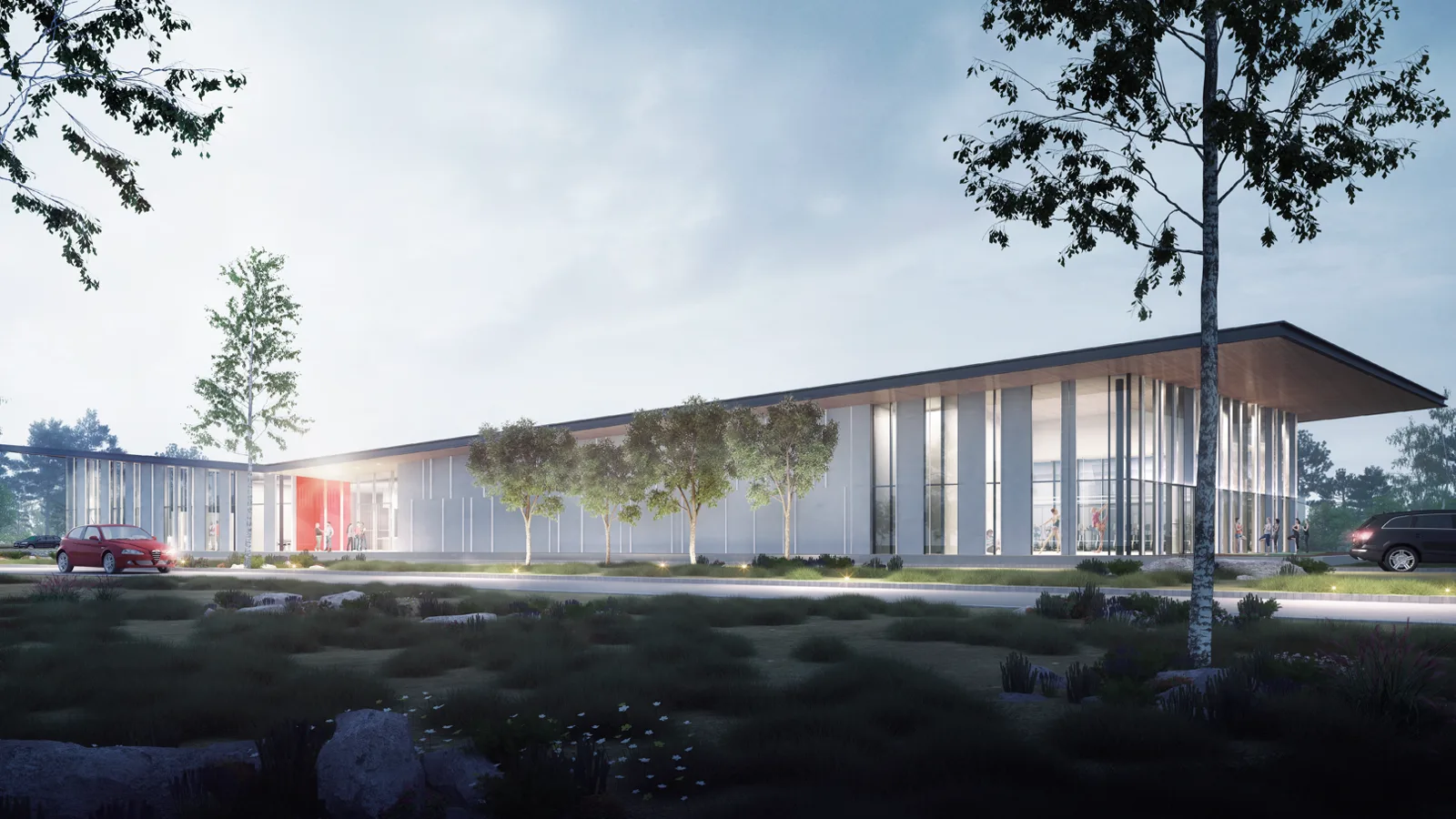
The concepts translate that direction into a facility journey, arrival and café spaces, recovery areas, a training environment, and connected physical and digital touchpoints.
Building on over 30 years of improving performance in leaders, the new HPI continues to serve internal J&J employees, Fortune 500 enterprise cohorts, surgical teams, executive leadership teams, individuals, and elite performers.
Jane is an illustrative participant, not a research testimonial. This proposed journey connects registration, travel, arrival, kickoff, and breakfast to service and digital support.
The platform defines a path to sustained wellbeing and performance. It connects that promise to values, character, and the ways the organization communicates and serves participants.
Seven dimensions connect service, graphics, dress, packaging, products, environments, and interactions. The framework treats them as one participant experience rather than separate design tasks.
The facility map follows arrival, learning, meals, assessment, exercise, recovery, and departure. It connects the service journey to the physical setting.
This architectural concept brings reception, food, and informal gathering into a shared space. It is a proposed environment, not a photograph of a completed facility.
The outdoor concept provides places to pause and connect between activities. Landscape and shared seating extend the participant experience beyond the classroom.
The training-space concept combines exercise equipment, daylight, and environmental messaging. It shows how the program’s character could be expressed in the setting.
Communications, course materials, digital interfaces, packaging, and apparel carry a shared design direction. Figures shown within the mockups are illustrative design content, not project results.
The deck has no named project stages, so the artifacts are grouped by inferred stage. The redesigned HPI launched in 2019 as part of J&J Learn, the internal training division of J&J.
Previous case study
O2: CX Trail
Next case study
Branch Banking Reinvented